
Model Context Protocol (MCP) Development & Integration Solutions
Oodles delivers production-ready Model Context Protocol (MCP) solutions that enable AI assistants to securely share context with external tools, databases, and APIs. We design and build custom MCP servers that standardize how AI systems access data, invoke tools, and maintain contextual continuity across enterprise applications.
What is Model Context Protocol (MCP)?
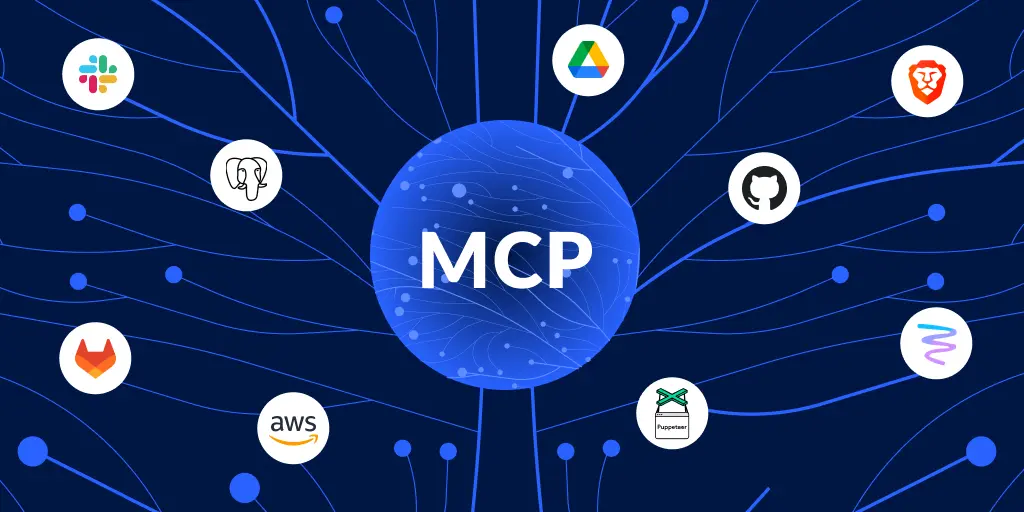
Model Context Protocol (MCP) is an open standard introduced by Anthropic that defines how AI assistants interact with external systems in a structured and secure way. MCP enables AI clients to discover and use resources, tools, and prompts exposed by MCP servers through a consistent protocol.
MCP servers act as middleware layers that connect AI assistants with databases, file systems, internal APIs, and business applications. Oodles uses MCP to build context-aware AI integrations that are interoperable, auditable, and scalable across enterprise environments.
Why Choose Our MCP Development Services?
Oodles specializes in building MCP servers that bridge AI assistants with enterprise data and tooling, enabling reliable context sharing and tool-driven automation.
- • Custom MCP server development using official MCP SDKs
- • Implementation in Python, TypeScript, or language-aligned stacks
- • Integration with databases, internal APIs, and file systems
- • Secure authentication, authorization, and access controls
- • Production deployments with logging, monitoring, and observability
Context Sharing
Enable AI assistants to retrieve and operate on structured data, files, and APIs using standardized MCP resources.
Tool Integration
Expose executable tools and actions that AI assistants can discover and invoke through the MCP protocol.
Standardized Protocol
Implement open MCP specifications to ensure compatibility across MCP-compliant AI clients and platforms.
Enterprise Ready
Implement open MCP specifications to ensure compatibility across MCP-compliant AI clients and platforms.
Our MCP Server Development Process
A structured delivery model used by Oodles to design, build, and deploy MCP servers in production environments.
Requirements Analysis
Identify enterprise data sources, tools, and workflows that need to be exposed through MCP.
Server Architecture
Design MCP server architecture defining resources, tools, prompts, and access boundaries.
Implementation
Implement MCP servers using SDKs, integrate databases and APIs, and define request handlers.
Testing & Validation
Validate server behavior using MCP-compatible clients, ensuring correct context resolution and responses.
Deploy & Monitor
Deploy MCP servers with authentication, logging, monitoring, and performance tracking enabled.
FAQs (Frequently Asked Questions)
MCP server design, implementation, and integration. Connect AI assistants to your files, databases, APIs, and internal tools. We build custom servers and help you deploy across Claude, Cursor, and other MCP clients.
MCP gives AI structured access to tools and context. Assistants can query databases, read files, and call APIs. Enables document Q&A, code analysis, and workflow automation with minimal custom glue.
Yes. We wrap your APIs, DBs, and file systems as MCP tools. Expose only what's needed. Add auth and scoping. AI assistants gain controlled access without direct integration complexity.
Local (stdio), HTTP, or SSE. Run on same machine as client or as remote service. We deploy on containers, serverless, or VMs. Choose based on latency and security needs.
Least-privilege execution, auth tokens, scoped tool access, and audit logging. We follow enterprise security practices for tool invocation and data exposure.
Basic MCP server: 1–2 weeks. Multi-tool with auth: 3–4 weeks. Full ecosystem: 2–3 months. Depends on tool count, integrations, and deployment requirements.
Dev tools, legal, finance, and knowledge work. Any team using AI coding assistants, document Q&A, or workflow automation benefits from standardized MCP integration.
Ready to build powerful MCP servers? Let's talk






We are ISO 9001:2015 Certified
Connect with us

Follow us