
Master AI Interactions with Expert Prompt Engineering
Oodles delivers production-ready prompt engineering solutions for large language models including GPT, Claude, and Gemini. We design structured, testable prompts and evaluation pipelines that improve accuracy, reduce cost, and ensure reliable AI behavior across enterprise applications.
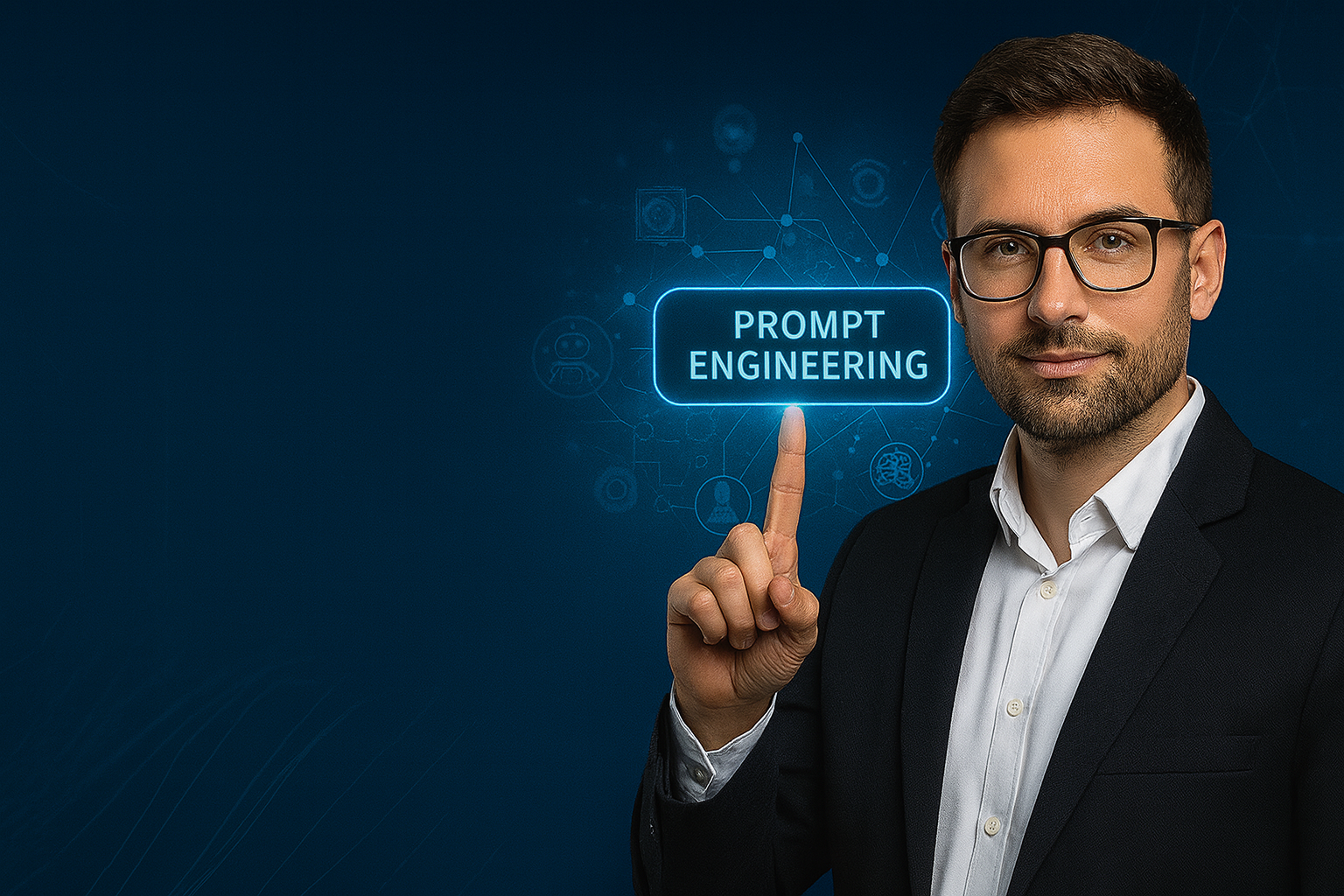
What is Prompt Engineering?
Prompt engineering is the practice of designing structured inputs that guide large language models toward consistent and high-quality outputs. It focuses on prompt structure, instructions, examples, constraints, and evaluation strategies to control model behavior without modifying or retraining the underlying model.
Why Choose Our Prompt Engineering Services?
Oodles applies engineering discipline to prompt design—combining structured instructions, prompt templates, RAG inputs, and evaluation workflows to deliver scalable, production-ready AI interactions.
- • Structured prompt templates for domain-specific accuracy
- • Advanced prompting patterns (instruction tuning, examples, reasoning control)
- • Multilingual and multimodal prompt optimization
- • Prompt pipelines integrated with RAG and agent workflows
- • Continuous testing, scoring, and prompt versioning
Precision Output
Eliminate hallucinations with structured, context-rich prompts.
Cost Efficiency
Reduce token usage and inference costs with optimized prompts.
Rapid Prototyping
Iterate quickly with prompt templates and A/B testing frameworks.
Enterprise Ready
Secure, compliant, and scalable prompt pipelines for production.
Our Prompt Engineering Process
A structured, iterative approach to designing, testing, and deploying high-performance prompts.
1
Requirement Analysis: Understand use case, desired output, and constraints.
2
Prompt Design: Create instruction-based, example-driven, and constraint-aware prompts.
3
Testing & Evaluation: Evaluate outputs using automated checks, human review, and quality metrics.
4
Iteration: Refine prompts based on performance and edge cases.
5
Deployment & Monitoring: Integrate prompts into applications with logging, version control, and feedback loops.
Key Prompt Engineering Techniques
Chain-of-Thought (CoT)
Control reasoning behavior using structured instructions and intermediate reasoning strategies without exposing internal model traces.
Few-Shot Learning
Provide examples within prompts to teach patterns instantly.
Role Prompting
Assign personas (e.g., “Act as a legal advisor”) for specialized responses.
Tree of Thoughts (ToT)
Explore multiple reasoning paths for optimal solutions.
RAG Integration
Combine retrieval-augmented generation with dynamic prompts.
Automated Evaluation
Measure prompt quality using task-specific metrics, output validators, and regression tests.
FAQs (Frequently Asked Questions)
Prompt engineering designs input text to steer LLM behavior. Good prompts improve accuracy, consistency, and task performance without retraining. Critical for production AI apps.
Chain-of-thought asks the model to reason step by step. Few-shot supplies examples of input-output pairs. Both improve reasoning and format consistency for complex tasks.
Use structured prompts with clear system/user boundaries, input sanitization, and output validation. Combine with moderation APIs and human review for sensitive use cases.
For many tasks, yes. Prompts are faster and cheaper. Use fine-tuning when you need consistent domain jargon, output format, or behavior that prompts cannot reliably achieve.
Prompt libraries, A/B testing frameworks, evaluation metrics, and integration into your app. Plus documentation and iteration support for ongoing optimization.
We test prompts on GPT-4, Claude, Gemini, and open models. Abstract prompt logic so you can swap providers. Tune per model for temperature, format, and constraints.
Customer support, content, legal, healthcare, and SaaS. Any team building chatbots, summarization, or content generation benefits from professional prompt design.
Ready to build with Prompt Engineering Services? Let's talk







We are ISO 9001:2015 Certified
Connect with us

Follow us